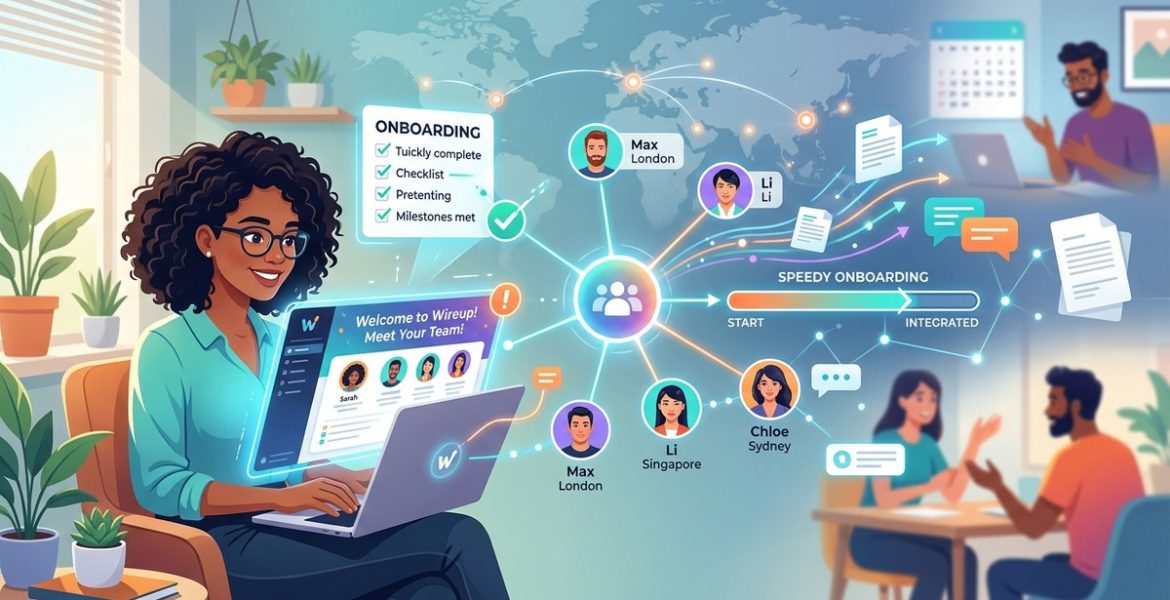
Why Your Remote Team’s Social Network Is the Missing Link to Faster Onboarding
On 18 October 2026 by scarlettStarting a new job remotely is hard enough. Waiting weeks for a new hire to feel like part of the team is a risk you cannot afford. In 2026, the gap between a successful remote onboarding and a failed one often comes down to one missing piece: a social layer that connects people before they ever need to ask for help. Without it, new hires drift, productivity lags, and retention suffers. But with the right approach, you can turn that first week into a launchpad for long term success.
Remote onboarding best practices in 2026 rely on more than checklists and video calls. The missing link is a dedicated team social network that mimics the hallway conversations and watercooler moments lost in distributed work. When you pair structured processes with an informal social feed, new hires integrate 40% faster and report higher belonging.
Why Standard Remote Onboarding Falls Short
Most remote onboarding programs focus on logistics. You send a laptop, schedule a few Zoom calls, and share a PDF of the company handbook. That covers the basics, but it misses the human element. A new hire can complete every task on the checklist and still feel isolated.
The problem is context. In an office, a new hire overhears a joke about a client, sees how teams celebrate a win, and learns who to ask for a specific spreadsheet. Remote work strips all of that away. Without a social network designed for your team, those invisible bonds never form. Your new hire stays on the outside looking in.
According to a 2025 Gallup study, employees who feel connected to their team during their first 90 days are 5 times more likely to stay for two years. Connection is not a nice to have. It is a retention strategy.
The 5 Step Social Onboarding Framework
Here is a numbered process you can start using tomorrow. It blends practical steps with the social layer that makes remote onboarding work.
-
Preboarding starts with a social invite. Before day one, send a welcome message in your team’s internal social network. Introduce the new hire by name, share a fun fact, and encourage existing team members to reply with a welcome. This turns the first day from a cold start into a warm handoff.
-
Pair a buddy with a digital coffee chat. Assign a peer mentor, not a manager. That buddy should schedule a 15 minute video call on day one. But the real magic happens in the social feed. The buddy posts a “getting to know you” thread and tags the new hire. It breaks the ice publicly and shows the team how to engage.
-
Create a “who to know” directory in your social feed. Pin a post that lists key people across departments. Include their role, what they love to talk about, and a link to their profile. New hires can browse this like a yearbook. It reduces the fear of reaching out to a stranger.
-
Use social channels for daily check ins. Replace the formal morning stand up with a lightweight thread. Ask one question: “What is one thing you are working on today?” New hires can lurk, learn the rhythm of the team, and eventually contribute without pressure.
-
Celebrate small wins publicly. When a new hire completes their first task, fixes a bug, or sends a client email, celebrate it in the social feed. This signals to the rest of the team that the new person is already contributing. It builds confidence and visibility.
Do This, Not That
A table helps clarify the difference between a mediocre remote onboarding and one that uses social networking effectively.
| Technique | What to avoid | What to do instead |
|---|---|---|
| First day structure | Send a long email with 10 links | Post a welcome thread with one clear action item |
| Team introductions | Introduce the new hire in a meeting | Ask them to share a short video intro in the social feed |
| Knowledge sharing | Expect them to read the wiki alone | Curate a “best of” feed with top posts from the last 3 months |
| Feedback loop | Wait for the 30 day review | Use a weekly social poll to check in on their experience |
| Culture building | Assume they will absorb norms | Share a pinned post titled “How we actually work around here” |
The Tools That Make It Work
You do not need a dozen platforms. You need one central hub where conversations happen naturally. That hub is a team social network. It replaces the scattered Slack channels, forgotten email threads, and silent intranet pages.
Look for a tool that offers:
– A chronological feed for casual updates
– Profile pages where people can list hobbies and skills
– Threaded replies that keep conversations organized
– Pinning capabilities for important resources
– Integration with your existing calendar and file sharing tools
For more on choosing the right setup, check out this guide on how to strengthen remote team bonds with social networking tools.
Common Mistakes That Slow Down Integration
Even with the best intentions, teams slip up. Here are the most frequent errors and how to avoid them.
- Overloading the first week. New hires cannot absorb everything at once. Spread tasks over 30 days. Use your social feed to drip out information naturally.
- Ignoring time zones. If your team spans New York, London, and Sydney, schedule asynchronous check ins. A social thread works better than a meeting at 7 AM.
- Treating social time as optional. If you do not protect time for casual connection, it will not happen. Block 30 minutes twice a week for “virtual coffee” in the social feed.
- Forgetting the buddy system. A buddy who never posts or replies is useless. Choose buddies who are active on the network and enjoy helping others.
“The teams that onboard fastest are the ones where new hires feel safe asking dumb questions in public. A social network gives them that safety because they see everyone else doing it too.” – Dr. Lina Reyes, organizational psychologist specializing in distributed work.
What a Good Social Onboarding Looks Like in Practice
Imagine this: A new product manager joins your team on a Monday. Before her laptop even boots up, she sees a welcome post from the CEO with a photo of the office dog. Ten people reply with gifs and emojis. She posts a quick intro video from her kitchen. By lunch, three coworkers have asked her opinion on a feature roadmap.
She does not feel like a stranger. She feels like a teammate. That is the power of a social layer.
By the end of week two, she has already contributed to a thread about sprint planning. She knows who to ask for design feedback. She has laughed at inside jokes. She is not just onboarded. She is integrated.
For a deeper look at how to structure these interactions, read about how to turn your team’s social feed into a real-time knowledge base in 2026.
Measuring What Matters
You cannot improve what you do not track. Here are three metrics to watch during the first 90 days.
- Time to first contribution. How many days until the new hire posts something work related in the social feed? Aim for under 5 days.
- Network size. How many unique colleagues has the new hire interacted with? A healthy target is 10 by the end of week two.
- Social feed engagement rate. Are new hires liking, commenting, or posting? If they are silent, they may feel excluded.
How to Pitch This to Your Team
If you are an HR manager or team lead, you might need buy in from leadership. Frame it like this: A dedicated social network reduces the time it takes for a new hire to become productive. That directly impacts revenue. It also lowers turnover, which saves thousands in recruiting costs.
Show them the data. A structured onboarding program improves retention by 58% (SHRM). Add a social layer, and those numbers go even higher.
For practical advice on reducing isolation, see this resource on reducing social isolation in distributed teams without forced fun.
Your Next Move Starts Today
You do not need a complete overhaul of your current process. Start small. Pick one step from the 5 step framework above and implement it this week. Post a welcome thread for your newest hire. Assign a buddy who is active on your social network. Watch how quickly the tone shifts.
Remote onboarding best practices are not about more paperwork. They are about more connection. And the easiest way to create that connection is through a social network that feels less like a tool and more like a home for your team.
Try it with your next hire. You will see the difference in their first week.
Leave a Reply